History

15 questions

ManacorLlevant

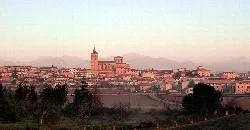
Can you tell me about the history of Manacor?

Manacor has a rich history dating back to prehistoric times, with human settlement evidence from 2000 to 1400 BC. The town was granted city rights in 1300 by Jaume II. Over the centuries, it evolved from a primarily agricultural economy to an industrial center, especially known for furniture and pearl manufacturing, particularly after the arrival of the railway in 1879.
For visitors ›

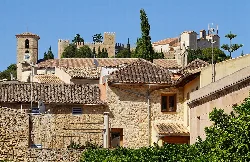
Castle on a hill with surrounding town and houses.
CapdeperaLlevant

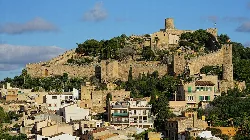
What is the history behind Castell de Capdepera?

Castell de Capdepera dates back to the 13th century and is one of Mallorca's best-preserved fortifications. Originally, a watchtower built by the Moors existed on the site. King Jaume I later established the castle to secure the area after the conquest of Menorca. The castle served as a defense against pirates until the late 17th century, after which the population gradually moved down the hill to the present town.

Castell de Capdepera For visitors ›

Buildings and castle in Artà, Mallorca, Spain
ArtàLlevant

What can you tell me about the castle in Artà?

The castle in Artà, known as the Almudaina, is a historic fortress that dates back to before the Islamic-Arab possession of Mallorca. It features a one-meter thick wall with nine towers, including the main tower of Sant Miquel. The castle surrounds the pilgrimage church of Santuari de Sant Salvador, which houses a carved wooden statue of the Virgin Mary.

castle For visitors ›

ArtàLlevant

What is the significance of the church of Santa Maria de Bellpuig?

The church of Santa Maria de Bellpuig is significant as it was founded by the Norbertines, or White Monks, in the 13th century. It played a crucial role in the establishment of the town of Artà and reflects the area's religious heritage. The church is located three miles southwest of Artà and is part of the historical context of the region.

Santa Maria de Bellpuig For visitors ›

PalmaPalma

What can you tell me about the Old City of Palma?

The Old City of Palma features narrow, winding streets and a rich architectural heritage reminiscent of Florence. It is home to historic sites, including the Ajuntament (Town Hall) and the Banys Àrabs (Arab Baths), providing a glimpse into the city's Moorish past.

Old City For visitors ›

PalmaPalma

What are the Arab Baths in Palma?

The Banys Àrabs, or Arab Baths, are one of the few remnants of Palma's Moorish history. Dating back to the 11th century, this small structure features a cupola with five oculi that illuminate the interior, showcasing the city's rich architectural heritage.

Banys Àrabs For visitors ›

Sineu town with church and surrounding fields and mountains.
SineuPla de Mallorca

What historical significance does the church in Sineu have?

The church of Santa María in Sineu dates back to 1248 and has a rich history, including a devastating fire in 1505 that led to its reconstruction in a Gothic style. It features a unique octagonal dome and houses a collection of medieval ceramics, which can be viewed during the market days.

Santa María Church For visitors ›

MarratxíRaiguer

What's the history behind the name Marratxí?

The name Marratxí has several possible origins. It may derive from the Mozarabic word for 'barraca', or from the Arabic term 'marrksí', meaning 'from Marrakesh'. The first mention of the municipality appears in the Book of Distribution of Mallorca as 'Barraxino'. Throughout history, it has been inhabited by various cultures, including Talayotic, Roman, Arab, and medieval Christian civilizations.

For visitors ›

IncaRaiguer

What historical significance does Inca have?

Inca has a rich history that spans from prehistoric times through Roman and Islamic periods to modern history. It was a significant agricultural and commercial center during the Islamic era and later became known for its shoe manufacturing industry, which flourished in the 19th and 20th centuries, shaping its economic landscape.

For visitors ›

IncaRaiguer

What is the significance of the Talayot in Inca?

The Talayot of Inca is an important archaeological site representing the Talayotic culture, which thrived in the region from around 2000 BC to 123 BC. These structures are remnants of ancient settlements, showcasing the historical significance of Inca and its early inhabitants, contributing to our understanding of prehistoric Mallorca.

Talayot For visitors ›

l'AlcúdiaRaiguer

What is the significance of the Església de Sant Jaume?

The Església de Sant Jaume is a neo-Gothic parish church in Alcúdia, built between 1882 and 1893. It was constructed after the previous church collapsed in 1870. This church is dedicated to Saint James and is a key religious site in the town, reflecting its architectural heritage.

Església de Sant Jaume For visitors ›

l'AlcúdiaRaiguer

What is the significance of the Ermita de la Victòria?

The Ermita de la Victòria is a 13th-century hermitage dedicated to the Virgin Mary. It features a baroque altar and is a pilgrimage site, especially on July 2, when locals celebrate with festivities. The site offers scenic views and is a peaceful retreat for visitors and locals alike.

Ermita de la Victòria For visitors ›

CalviàSerra de Tramuntana

How did Calvià become a popular tourist destination?

Calvià's rise as a tourist destination began in the 1960s, driven by the development of its coastal resorts. The establishment of steamboat services in 1838 made access easier, attracting visitors seeking adventure and therapeutic experiences. Over time, its beautiful beaches and scenic landscapes solidified its reputation as a prime vacation spot.

For visitors ›

CalviàSerra de Tramuntana

What historical events are significant in Calvià?

A key historical event for Calvià is the landing of King James I of Aragon on 10 September 1229, marking the beginning of the conquest of Mallorca. This event significantly influenced local culture and traditions, as it led to the establishment of Catalan language and customs in the region.

For visitors ›

Street view with cathedral in the background in Sóller, Mallorca.
SóllerSerra de Tramuntana

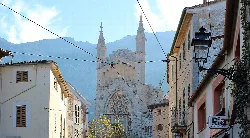
What is the history behind the cathedral in Sóller?

The cathedral, known as Sant Bartomeu, was built before 1236 and has undergone several modifications over the centuries. It features remnants of Romanesque gates and walls from the 16th century. The current baroque style was established between 1688 and 1733, with a neo-Gothic bell tower added later. The modernist façade, designed by Joan Rubió i Bellver, was completed in 1904.

Sant Bartomeu For visitors ›