 mallorca.net
 H. Zell, CC BY-SA 3.0
Mallorca
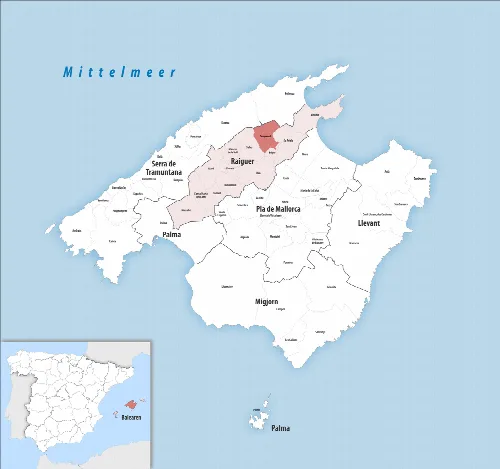
Escorca is a municipality located in the Serra de Tramuntana region of Mallorca, known for its mountainous landscape and lack of a central town. The area features stunning natural formations and is home to the famous pilgrimage site, Santuari de Lluc.
Situated on the northwest coast of Mallorca, Escorca encompasses a mountainous region within the Serra de Tramuntana. The municipality is traversed by the MA-10 road, which connects Sóller and Pollença, and features the dramatic MA-2141 serpentine road leading down to Sa Calobra. Escorca's coastline is marked by steep cliffs and deep inlets, where torrents channel rainwater from the mountains into the sea.
The name Escorca is believed to derive from the ancient Roman word 'skulka', meaning 'place of watch'. The area is historically significant, particularly due to the legend of the black Madonna discovered by a shepherd named Lluc, which led to the establishment of the Santuari de Lluc in 1260. The Templar Order played a crucial role in the region's history following the Christian conquest of Mallorca.
Escorca is a unique municipality in Mallorca's Serra de Tramuntana, characterized by its mountainous terrain and rich cultural heritage.
Escorca offers a variety of natural and cultural attractions, including the Torrent de Pareis and the picturesque villages of Sa Calobra and Cala Tuent. The region is ideal for hiking, with numerous trails leading through the stunning landscapes of the Serra de Tramuntana. The Santuari de Lluc serves as a major pilgrimage site and cultural center.


Own text, written with AI assistance from the facts in Wikipedia · Escorca · Data: Wikidata Q950951 · Photos: Wikimedia Commons, see individual licenses. · CC BY-SA 4.0